Description
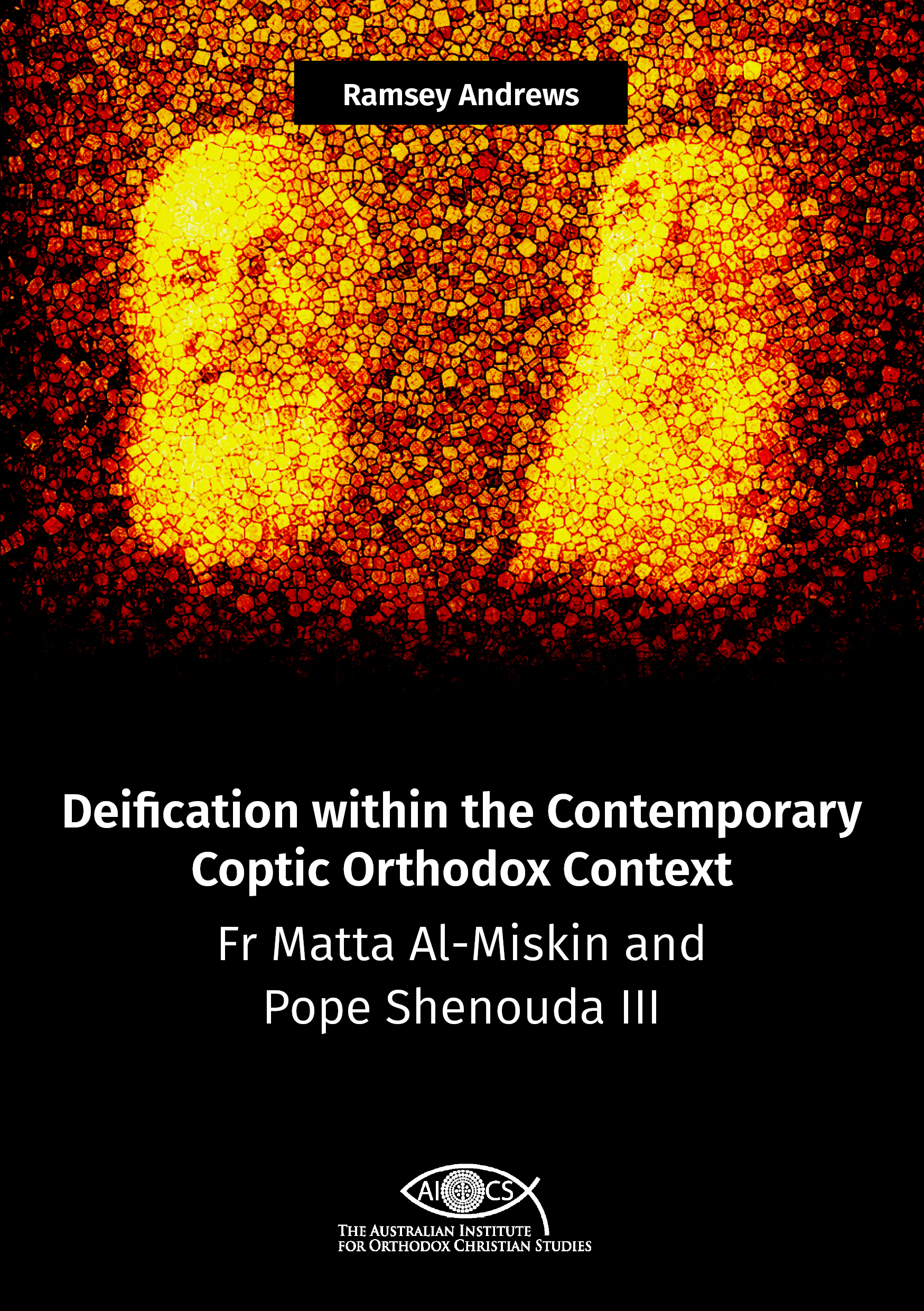
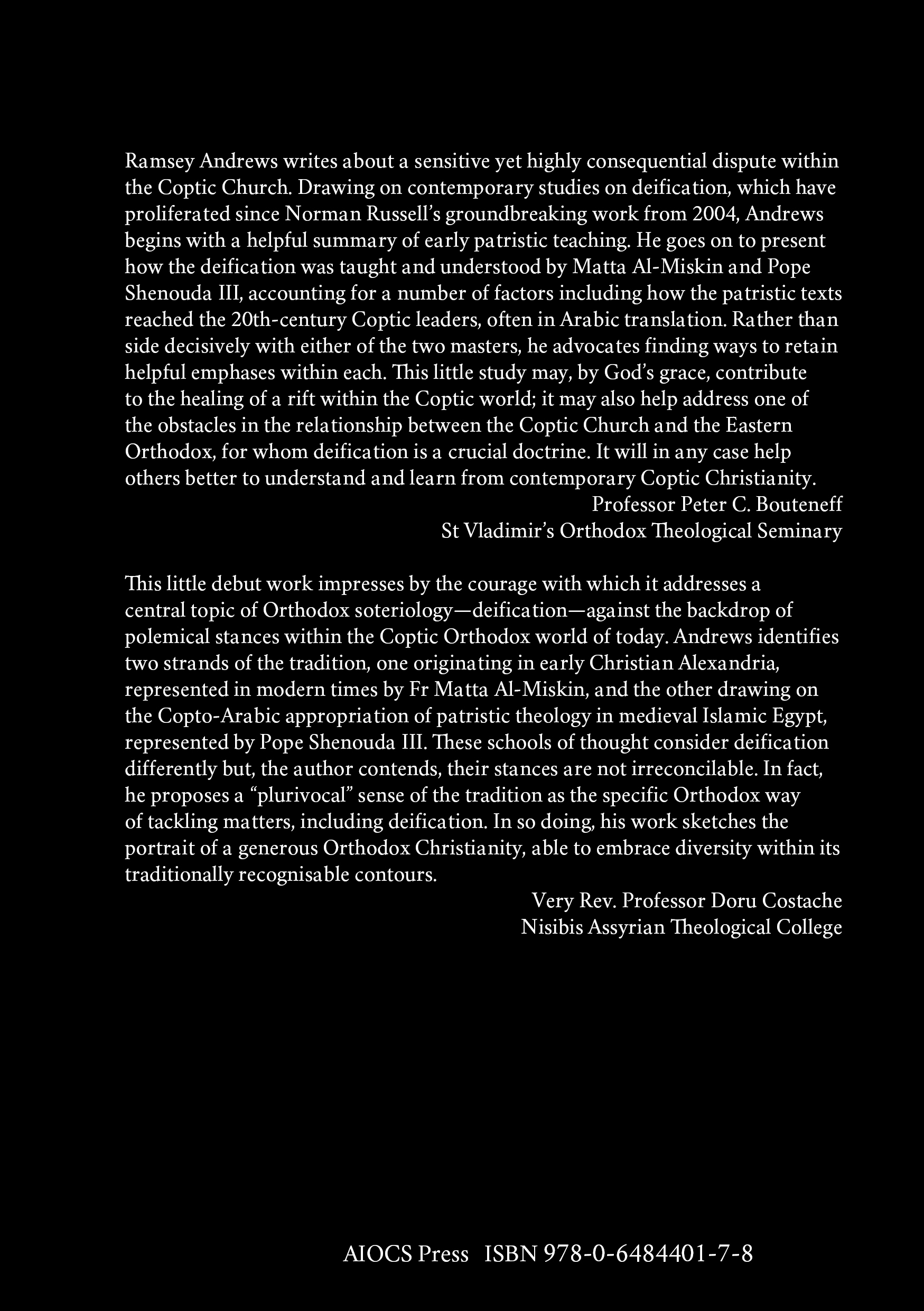
Ramsey Andrews writes about a sensitive yet highly consequential dispute within the Coptic Church. Drawing on contemporary studies on deification, which have proliferated since Norman Russell’s groundbreaking work from 2004, Andrews begins with a helpful summary of early patristic teaching. He goes on to present how the deification was taught and understood by Matta Al-Miskin and Pope Shenouda III, accounting for a number of factors including how the patristic texts reached the 20th-century Coptic leaders, often in Arabic translation. Rather than side decisively with either of the two masters, he advocates finding ways to retain helpful emphases within each. This little study may, by God’s grace, contribute to the healing of a rift within the Coptic world; it may also help address one of the obstacles in the relationship between the Coptic Church and the Eastern Orthodox, for whom deification is a crucial doctrine. It will in any case help others better to understand and learn from contemporary Coptic Christianity.
Professor Peter C. Bouteneff
St Vladimir’s Orthodox Theological Seminary
This little debut work impresses by the courage with which it addresses a central topic of Orthodox soteriology—deification—against the backdrop of polemical stances within the Coptic Orthodox world of today. Andrews identifies two strands of the tradition, one originating in early Christian Alexandria, represented in modern times by Fr Matta Al-Miskin, and the other drawing on the Copto-Arabic appropriation of patristic theology in medieval Islamic Egypt, represented by Pope Shenouda III. These schools of thought consider deification differently but, the author contends, their stances are not irreconcilable. In fact, he proposes a “plurivocal” sense of the tradition as the specific Orthodox way of tackling matters, including deification. In so doing, his work sketches the portrait of a generous Orthodox Christianity, able to embrace diversity within its traditionally recognisable contours.
Very Rev. Professor Doru Costache
Nisibis Assyrian Theological College